The Story of AIKICHUN: From Personal Doubt to Elite Tactical Reality
“What if a real threat hits right now… when I’m exhausted, jet-lagged, or far from my peak?”
That single question changed everything for Mohamed Youssry Al-Fayez in the early 2000s.
As a young businessman building an international trade career, Mohamed had already tasted traditional martial arts — starting with Karate and Kung Fu as a boy, drawn to their power and discipline. But real life hit hard: endless flights, high-stakes meetings, irregular sleep, and no time for hours of grueling athletic conditioning. Traditional systems demanded peak physical condition every session. He realized they wouldn’t reliably protect him — or his loved ones — in the unpredictable moments that matter most.
That moment of raw honesty became the spark.
In 2003, his search led him to Aikido — the art of “fighting without fighting.” Its core philosophy — redirecting an attacker’s force with precision, circular motion, and minimal harm — felt revolutionary. Mohamed dove in completely, training intensely and earning 5th Dan (5th Degree Black Belt) in respected lineages. Aikido delivered elegant control, mental calm, and defense without brutal escalation. It aligned perfectly with his vision: smart mechanics over raw strength.
Yet after years of deep practice and real-world pressure-testing (street scenarios, high-stress simulations, skilled opponents), limitations surfaced. Aikido excelled at redirection once engaged, but closing distance against fast strikers or aggressive multiple threats often felt too slow or purely reactive. The bridge between ranges was missing.
Mohamed turned his global business travel into a strategic mission. In every country, he sought the best masters. Over six intensive years in China and Southeast Asia, he immersed himself in authentic Wing Chun (under Master Ronald Kho in the direct Ip Chun lineage), Kali, Muay Thai, Silat,SAMBO and Brazilian Jiu-Jitsu.
He didn’t just collect techniques. He dissected them ruthlessly — keeping what worked in chaos, eliminating what failed under fatigue or surprise, and forging seamless transitions. The result: AIKICHUN — a unified, progressive tactical combat system, not a random hybrid.
AIKICHUN integrates:
- Aikido-NINJUSTU— harmony, redirection, and effortless control
- Wing Chun-kali-silat-SAMBO— zero-distance precision strikes, trapping, and weapon defense (knife/stick)
- Brazilian Jiu-Jitsu — ground survival only when truly necessary
- Practical, battle-tested tools from other systems
All connected in one clear curriculum: penetrate resistance, reach “point zero,” control with maximum efficiency and minimal effort. Responses become instinctive through realistic scenario drilling.
Real Proof in the Field
In Egypt, Mohamed trained elite Special Forces officers (top Military Academy graduates), distilling complex principles into fast, high-stress execution. He supervised official combat demonstrations presented before the President of the Republic.
The breakthrough came internationally (2015–2019) in Shenzhen, China, collaborating with the Criminal Investigation Department (CID) crime-prevention and counter-terrorism units. They had used Israeli Krav Maga, but after direct live comparisons and evaluations, they made a decisive switch: AIKICHUN became their primary system for four consecutive years.
Why AIKICHUN over Krav Maga?
| Aspect | Krav Maga (Typical) | AIKICHUN |
|---|---|---|
| Core Goal | Aggressive neutralization + escape | Sustained control, arrest, de-escalation, can be Aggressive neutralization + escape |
| Best For | Military/do-or-die survival | Law enforcement / security (stay on scene)/Military/do-or-die survival |
| Injury Philosophy | Accepts high collateral risk | Minimizes unnecessary harm (professional) |
| Curriculum | Often inconsistent across instructors | Unified, progressive, scalable methodology |
| Adaptability | Relies more on power & aggression | Leverages mechanics, timing, and intelligence |
| Range Transitions | Often linear / explosive | Smooth, fluid across all distances |
For police and investigators — who must handcuff, document, and resolve incidents lawfully — AIKICHUN proved faster to learn, more consistent, and operationally superior.
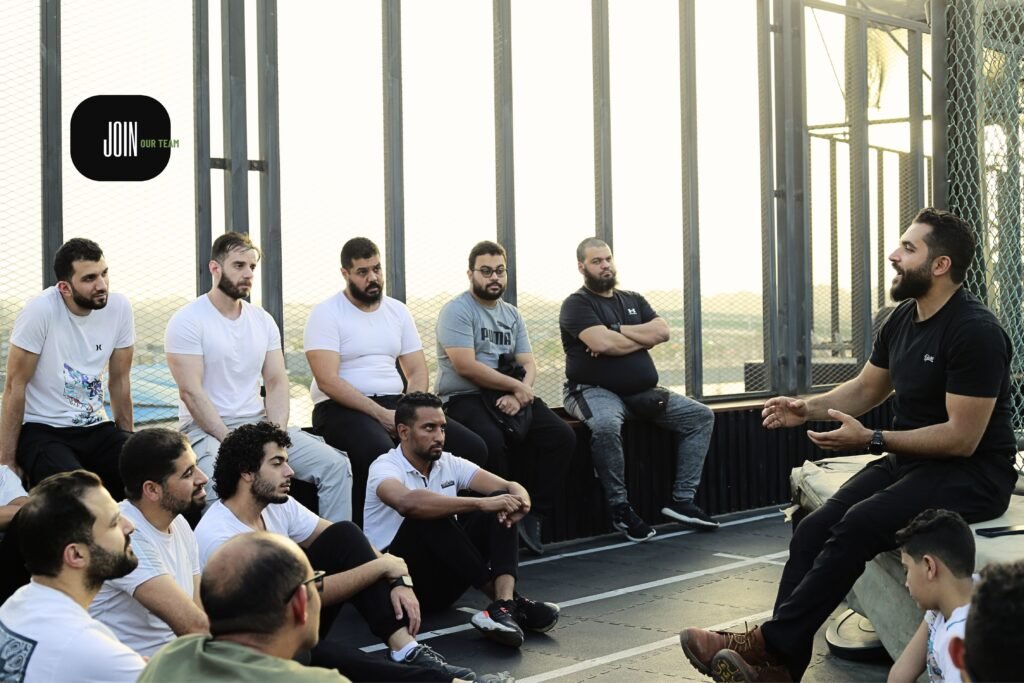
Back in Egypt, Mohamed founded QOWAT Tactical Fighting School in Cairo. In just three years, it drew nearly 1,000 students — including active Special Forces, Police officers, and experienced martial artists filling gaps in their own training. Professionals use it daily in the field and return weekly to refine.
AIKICHUN is TACTICAL MMA but not:
- Sport MMA — sport with rules and points
- Traditional competition arts — tournament-focused
- Pure self-defense gimmicks — unreliable under real pressure
It is built exclusively for reality: threat neutralization, suspect control, mission success — with or without gear, for any body type, even under fatigue.
Today, Mohamed continues expanding AIKICHUN to elite units worldwide.
The legacy is clear: True combat superiority isn’t about being the strongest. It’s about being the smartest, most tactical, and best prepared.
“Fighting without Fighting” is no longer philosophy. It is proven, field-tested reality that protects lives and achieves objectives.
This is AIKICHUN. This is the future of tactical combat.
Ready to experience the difference?
contact QOWAT Tactical Fighting School in Cairo today. Limited spots for trial sessions — secure yours now.